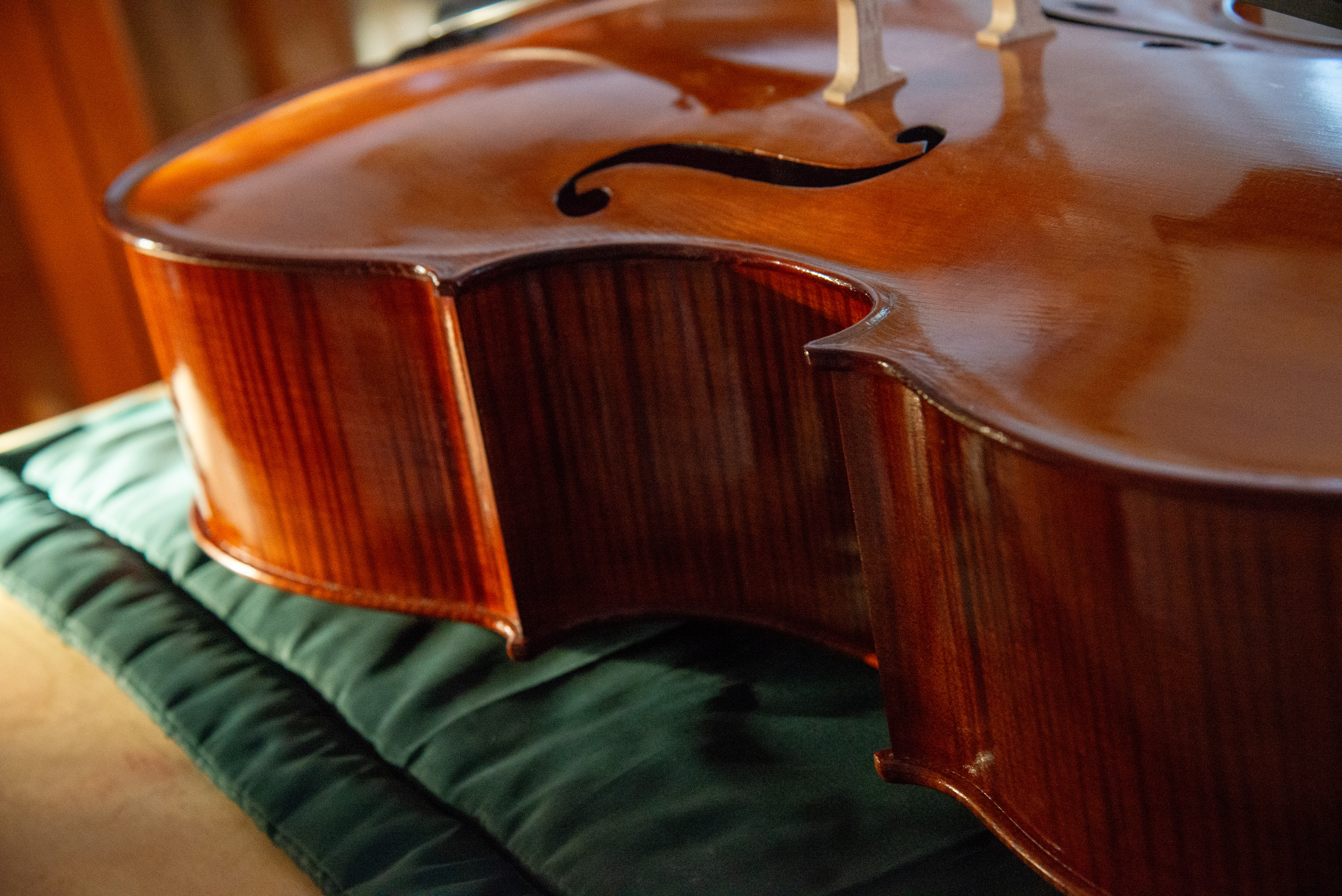
Building more than one instrument from the same model is one of the most interesting ways to understand how much a historical form is, in reality, a starting point. The measurements may be the same and the reference may remain unchanged, but the result will never be an acoustic copy of the previous instrument.
The model is not a recipe
A form defines outline, proportions and an important part of the identity of the instrument. It does not automatically determine arching, distribution of thicknesses, weight of the plates, characteristics of the wood, setup or final adjustment.
In my work I return to certain models from Venetian and Tuscan lutherie. Repeating a model makes it possible to know it better: some relationships become clear only after seeing different instruments born from the same approach.
The wood changes the project
A lighter and stiffer spruce top cannot be treated mechanically like a denser top. The same applies to a maple back with different characteristics. The model remains recognisable, but the work must listen to the material available.
The individual voice of the instrument
For a musician, the important question is not whether two instruments share a form, but how they respond under the bow. Readiness, resistance, articulation, balance between registers and projection depend on the whole instrument and its setup.
I therefore consider every new construction a continuation of the previous work, not a replica.