Roberto Montagna
Luthier and maker of medieval instruments. He works in his own workshop in Casale di Scodosia, in the province of Padua.
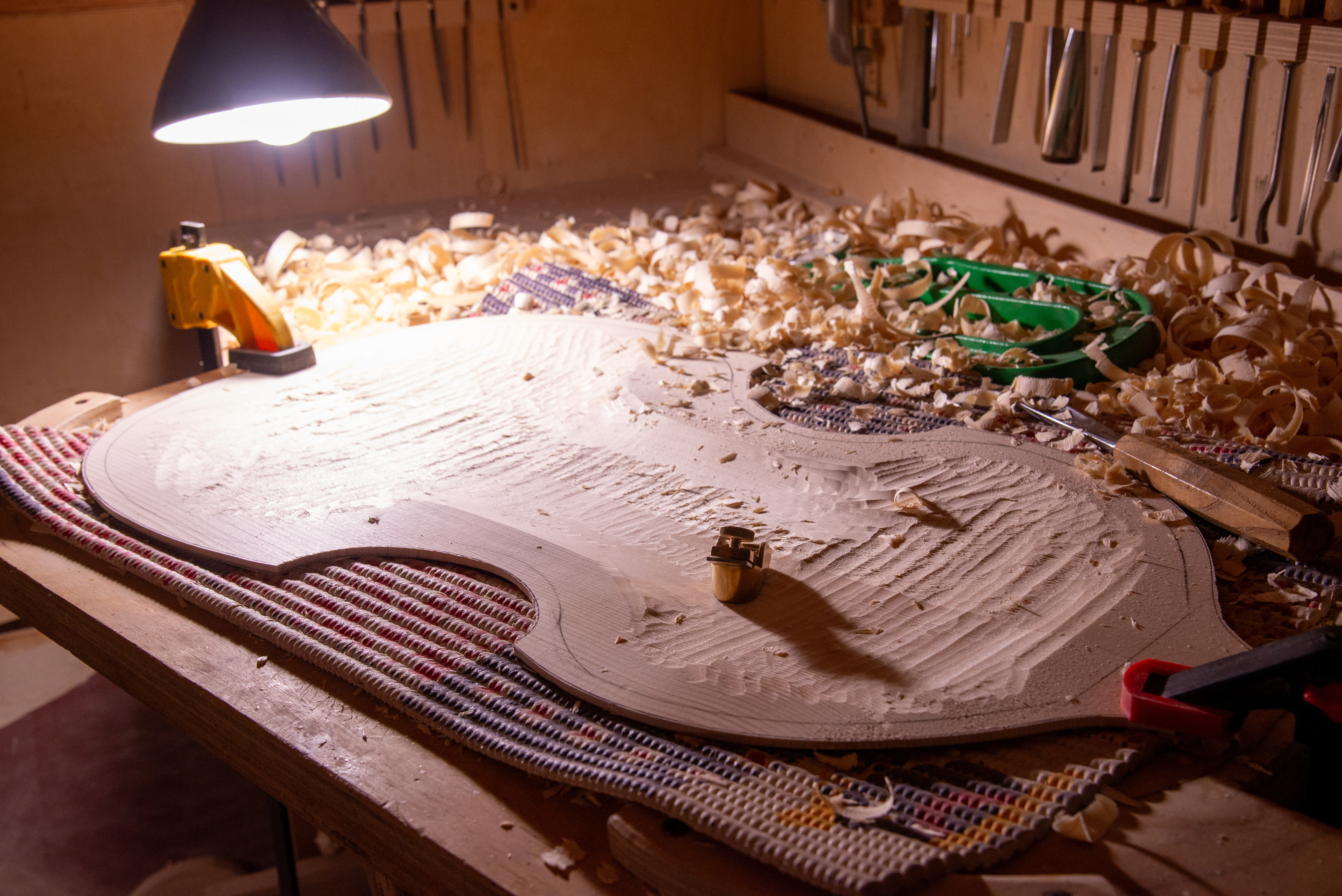
From instrument making to lutherie
Roberto Montagna was born in Montagnana in 1981. He approached music through the study of the transverse flute and, after professional experiences in craft workshops, began to take an interest in the construction of musical instruments in 2007.
After first building a guitar, his attention moved towards bowed instruments. In 2009 he met the luthier Fabio Chiari and began attending his workshop, deepening his study of classical lutherie and its construction methods.
Diploma from the Scuola Toscana di Liuteria.
Diploma in reconstruction of medieval instruments, at the same school.
Premio Italia Medievale for his work in the field of medieval musical instrument reconstruction.
Bowed instruments
In his workshop in Casale di Scodosia he builds violins, violas and cellos, working mainly on models from Venetian and Tuscan lutherie.
Among the references for his work are Domenico Montagnana, Santo Serafino, Giovanni Battista Gabrielli and the Carcassi family.
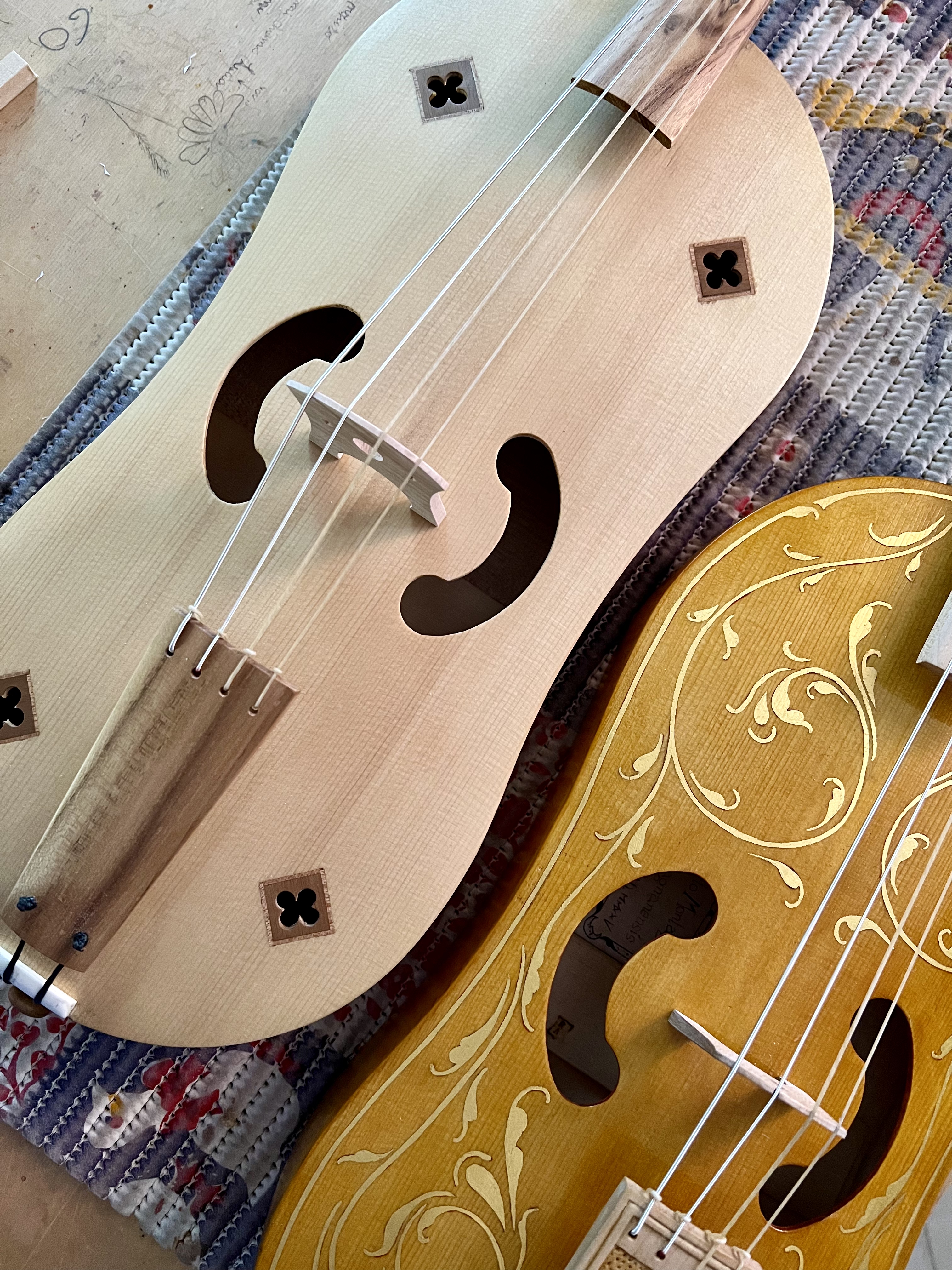
Sources and reconstruction
Alongside classical lutherie, he studies and reconstructs medieval instruments. Vielle and rebecs are developed through the observation of iconographic sources, the study of surviving instruments, and research into materials and construction techniques.
Research on wood
Part of the work is dedicated to research into woods. Alongside sycamore maple and red spruce from Val di Fiemme, he uses and studies Italian woods such as field maple, poplar, willow, pear and cherry.
When conditions allow, he also follows the selection and felling of trees intended for instrument making.
His instruments have been presented at exhibitions and events in Italy and abroad, including Mondomusica in Cremona and Music China in Shanghai, as well as other exhibitions in Italy and Germany.
He also collaborated, with the group Liutai Toscani d'Oggi, on a publication dedicated to the influence of Tuscan culture on the evolution of classical and modern lutherie.