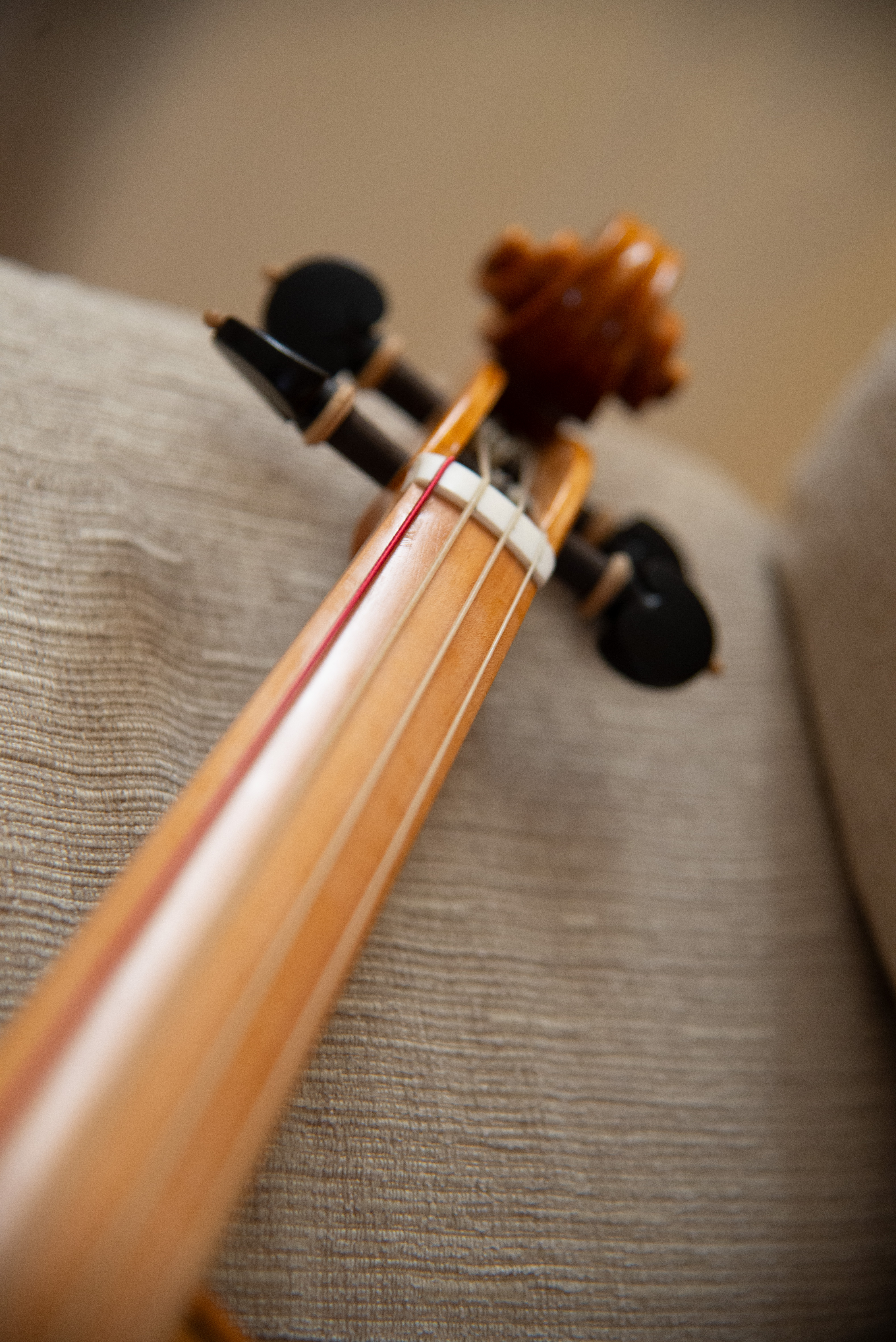
Varnish is one of the most visible parts of an instrument and, for this reason, one of the easiest to reduce to an aesthetic problem. Colour, transparency and depth are important, but a varnish for lutherie must first of all coexist with a light and vibrating structure.
Before the varnish
The final result depends greatly on what happens before the visible layers are applied. Surface preparation and the relationship between wood and first treatment influence absorption, the refraction of light and the later behaviour of the varnish.
Resins, oils and the behaviour of the film
Historical varnishes and workshop recipes use very different families of materials: drying oils, hard and soft resins, essences and substances used to modify workability and the characteristics of the film.
I do not believe that a single recipe can be separated from the procedure. Temperature, cooking time, proportions, preparation of the surface, thickness of the layers and drying times profoundly change the result.
A light presence
The varnish must protect the wood from use and environment without becoming an armour. A layer that is too heavy adds mass and can limit response; a fragile or incoherent layer does not adequately perform its protective function.
Time as part of the process
A varnish changes as it is applied, during drying and in the years that follow. Colour and surface mature; the film settles and use leaves traces. For this reason I observe carefully the instruments that return to the workshop.