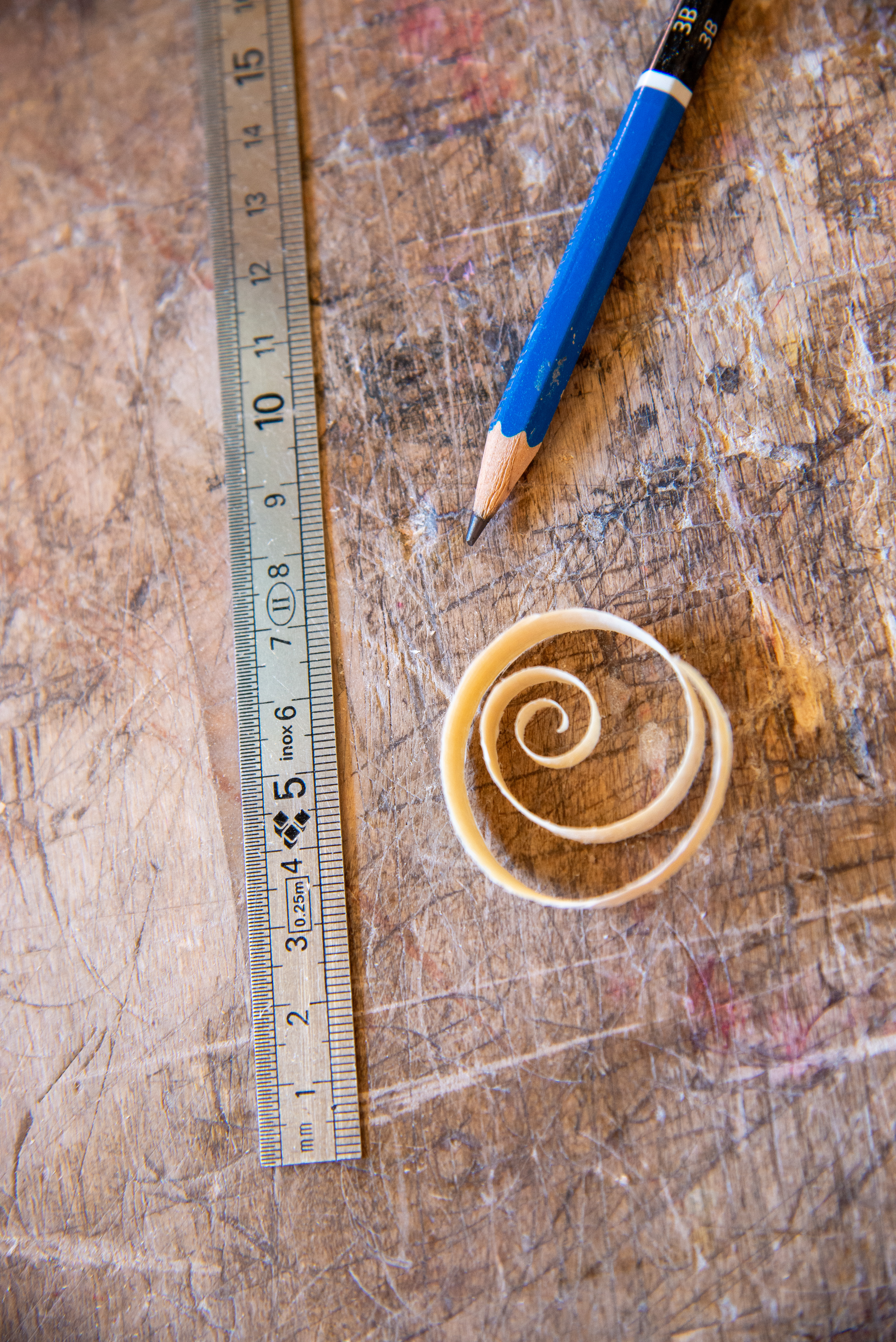
Choosing wood is one of the moments in which the project of an instrument begins to take a concrete direction. There is no ideal wood in an absolute sense. There are materials with different characteristics, and the work consists in understanding them and relating them to the model, the size of the instrument and the result being sought.
Beyond the name of the species
To say red spruce for the top and maple for the back, ribs and neck only describes part of the question. Two pieces of the same species may differ greatly in density, stiffness, speed of vibration, regularity of growth and fibre structure.
I observe the weight of the piece, its stiffness in different directions, the regularity of the growth rings and the way the material reacts to tools. The sound of a rough plate when tapped can also offer indications, provided it is not turned into an isolated rule.
Maple, poplar, willow and other woods
In bowed-instrument making, sycamore maple has a central place, but the history of lutherie shows a broader range of materials. Poplar and willow have often been used for larger instruments; field maple and other local woods can offer interesting characteristics.
The figure of maple is important visually, but it should not become the main criterion. A spectacular back is not automatically the right back for every instrument. The relationship between mass, elasticity and geometry remains more important than the photographic effect.
Cut and seasoning
The way the trunk is sawn determines the orientation of the fibres. For the soundboard, a regular radial cut is normally sought; for backs and ribs the possibilities are more varied and also depend on the construction tradition taken as a reference.
Seasoning is not simply waiting. The wood must lose moisture in conditions that limit tension, deformation and cracking. Time is important, but by itself it does not guarantee quality.
From tree to bench
When possible, I personally follow the selection and felling of trees intended for instrument making. It is a different experience from buying a prepared plate: it allows one to observe the relationship between tree, place of growth, structure of the trunk and the material that will one day arrive on the workbench.